Customer Portals for Picture Framers
A customer portal for picture framers gives your customers one login to submit artwork details, approve moulding and mat choices, follow each job through the shop, and pay their invoice. We build it on a portal foundation we have already shipped, tailored to how your shop takes in work and turns it around.
Intake That Captures the Whole Framing Brief
Every custom job starts with details that are easy to lose: artwork dimensions, medium, mat width and color, moulding selection, glazing choice, and whether the piece needs conservation mounting. When those live on a paper ticket or in a text thread, someone at the bench ends up guessing or calling the customer back.
In the portal, customers submit the piece through a structured intake form: dimensions, photos of the artwork, where it will hang, and any preservation requirements like acid-free matting or museum glass. Your team reviews it, quotes it, and the customer approves with one click. The full brief follows the job to the bench.
Job Status From Design Approval to Pickup
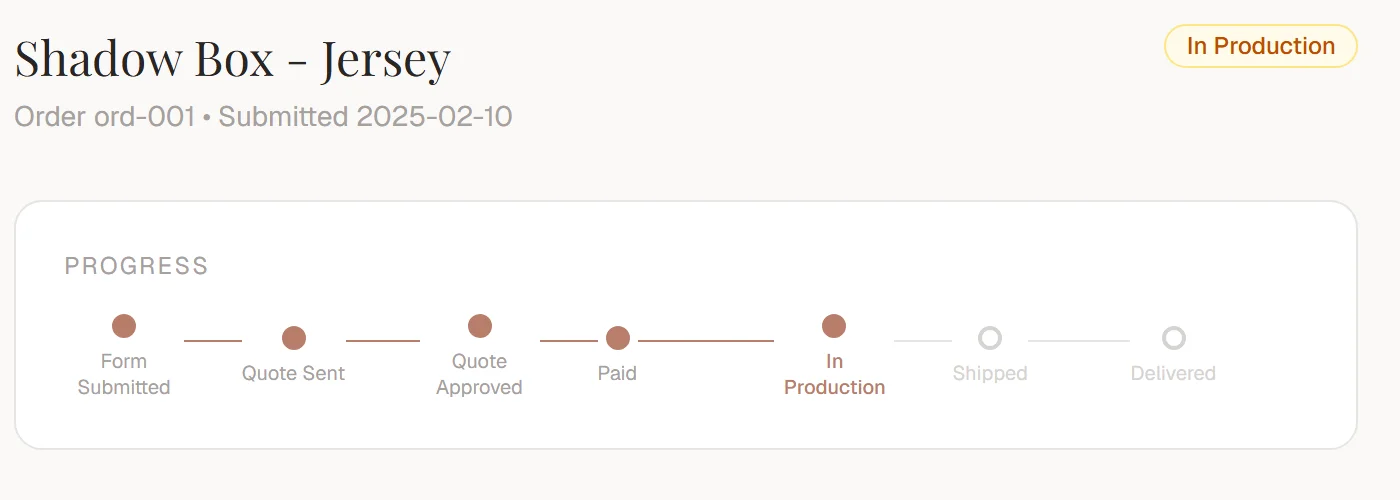
Custom framing turnaround is measured in weeks, and every one of those weeks generates "is my piece ready?" calls. With a portal, each job shows its real stage: design approved, materials ordered, mounting, fitting, and ready for pickup. You update the status once and the customer sees it instantly, along with the specs they approved.
Design Approvals in Writing, Not From Memory
A verbal "yes, the walnut with the double mat" at the counter is not the same as an approved spec. The portal records the exact moulding, matting, and glazing the customer signed off on, with the quote attached. When a piece comes off the wall clamps and the customer squints at it, you both look at the same approved design instead of debating what was said three weeks ago.
The result is a shop that runs on one system instead of an order book, an inbox, and a stack of envelopes: intake, design approval, production status, and payment in one place, with every remake and change request attached to its job.
What Every Lever Portal Includes
Every portal starts from a proven foundation we have already built and shipped, then gets tailored to your workflow.
A pre-built portal foundation
Intake, quotes, orders, and payments are already wired together. We tailor it to your workflow instead of starting from zero.
Roles for customers, staff, and production
Customers see their orders, your team sees the full queue, and the shop floor sees its assignments. Everyone gets exactly their slice.
Automatic email notifications
Quote ready, status changed, invoice due. Your customers hear about it without anyone writing an email.
Integrations with your existing tools
Connect your CRM, email marketing, and accounting so data stops living in six disconnected places.
Payments, invoices, and PDFs
Customers approve quotes, download invoices, and pay online without a single phone call.
Real-time order status
Production updates flow straight to the customer's dashboard. No more "where is my order?" calls.
Start With the Baseline Portal
From $999 setup + $299/mo
Managed for you
Setup tailors the portal to how your business actually runs - your services, statuses, and intake fields. The monthly covers hosting, management, and ongoing changes, with payments landing directly in your own Stripe account. Integrations and custom features get scoped on your call.
We Have Already Built This
Customer Portal for a Made-to-Order Manufacturer
A spec build for a custom fireplace screen manufacturer - replacing six fragmented tools and a brittle Zapier setup with a single portal that runs the full order lifecycle, from intake to production to payment.
Frequently Asked Questions
How long does it take to build a customer portal for a frame shop?
Days to a few weeks, not months. We start from a portal foundation we have already built and shipped, then tailor the intake form, job stages, and roles to how your shop takes in and produces work. You can explore the live demo of that foundation before we start.
Does a portal replace the design consultation at the counter?
No, and it should not. The portal captures everything before and after the consultation: artwork dimensions and medium, photos of the piece, where it will hang, and budget expectations. You still make moulding and mat recommendations in person or over a call, then post the agreed design in the portal so the customer approves the exact spec in writing.
Can it handle conservation and archival requirements?
Yes. The intake and job record carry the details that matter for preservation work: conservation mounting, acid-free matting, UV-filtering or museum glass, and any do-not-trim instructions. Those notes stay attached to the job instead of living on a paper envelope, so nothing gets lost between the counter and the bench.
Will it actually reduce status calls about custom orders?
That is the main reason shops build one. Every job shows its real stage, from design approved to mounting, fitting, and ready for pickup. Customers check the portal instead of calling, and repeat clients like designers, galleries, and offices can reorder or start a new piece without re-explaining anything.
What does it cost?
Every build gets a fixed-price proposal scoped before any work begins, based on a free audit of how your shop runs today. No hourly billing and no surprise invoices.