Building AI Agents That Actually Work: What I Learned Running My Agency on One
Most AI agent demos are impressive but useless. Three months of building agents into my agency, from a single proposal generator to a full ops engine, taught me what actually matters.
Most AI agent demos are impressive and useless.
I have watched founders show off agents that summarize Slack, draft emails, and "think" in public. The demos look great. Then you ask: how much time does this actually save? And the answer is a shrug. Maybe twenty minutes a week. Maybe.
The short version of what I learned: an agent works when it has persistent context about your business, real access to your tools, and one narrow job. Everything else is demo material. Built that way, mine turned proposal drafting from half a day into about fifteen minutes.
I started building agents for my agency three months ago. The first was narrow: a proposal generator. I have been adding and iterating ever since, and about a month ago the pieces came together into a real ops engine. It runs my email triage, processes call transcripts into proposals, manages client tasks, and does research across all my client projects. The difference is not twenty minutes. It is hours, every day.
But it did not start that way. And most people trying to build agents are making the same mistakes I made at the start.
Up until recently, AI agents were a vanity tool that did not provide real value. For the first time, that is changing.
What problem do agents actually solve?
The problem was never capability. It was context.
The tools existed before agents. I had ChatGPT. I had Claude. I could paste in meeting notes and ask for a summary. I could draft emails. The AI was there.
MIT's Project NANDA reached the same conclusion at enterprise scale. Its report "The GenAI Divide: State of AI in Business 2025" found that 95 percent of generative AI pilots deliver no measurable P&L impact, and it blames a learning gap, not the models: tools that do not learn from or adapt to the workflows around them. In other words, missing context.
I lived the small-business version of that. Every conversation started from zero. I would open Claude, paste in a transcript, explain my business, explain the client, explain what a good proposal looks like for us. By the time I finished setting up the context, I had already done half the work myself.
That context problem shows up three ways:
Strategy conversations restart every time. You want to think through a decision, but first you have to re-explain your business, your constraints, your history. The AI has no memory of the six conversations you had last month about the same topic.
Outputs are inconsistent. Even with templates, every proposal came out a little different. The AI did not know what a "Lever Agency proposal" should look like. I knew, but I had to explain it fresh each time.
Research is repetitive. Whether it was SEO analysis or market research, I had to re-explain what Lever Agency does, who our clients are, and what matters to us. Every single time.

What changes when the agent knows your business
My agent runs locally on my machine. It has access to a knowledge base about my business: what we do, who our clients are, our pricing, how we write proposals, how we communicate. It has access to my client project folders, so it can look up code, past deliverables, and context without me explaining anything.
When a call ends, I send the transcript. The agent knows how we structure proposals. It knows the client from the folder context. It knows our pricing tiers. The AI drafts the content, then a script renders it into our branded PDF, the same layout and pricing tables every time. The output is not "an AI-drafted proposal." It is a Lever Agency proposal, done in about fifteen minutes instead of half a day.
The same pattern applies to email. The agent reads my inbox each morning and surfaces what matters. It does not summarize everything. It knows which clients are active, what projects are in flight, and what needs my attention versus what can wait.
Even our website runs through it. The agent is connected to the site's codebase the same way it is connected to email, call transcripts, and client tasks, so adding a case study, publishing a blog post, or updating an intake form is a request, not a project. This post shipped exactly that way. A blog post used to take me three to six hours to produce. This one took about 45 minutes, edits included.
From call transcript to formatted proposal.
Why most agent projects fail
I talk to other founders experimenting with agents. Most hit the same three walls I did: they over-scope, they skip the tooling, and they expect magic on day one.
They over-scope. The instinct is to build one "second brain" that does everything. That fails. The context window fills up. The agent gets confused about which of its fifteen capabilities you want right now. Better to have narrow, specialized agents. I run several. The ops agent handles the day-to-day of the business. A separate SEO agent runs client site audits and rank tracking on a schedule. Another one builds complete draft websites for local businesses we want to pitch, for about seventy cents of AI cost per site. Each has its own instructions, its own tools, and one job.
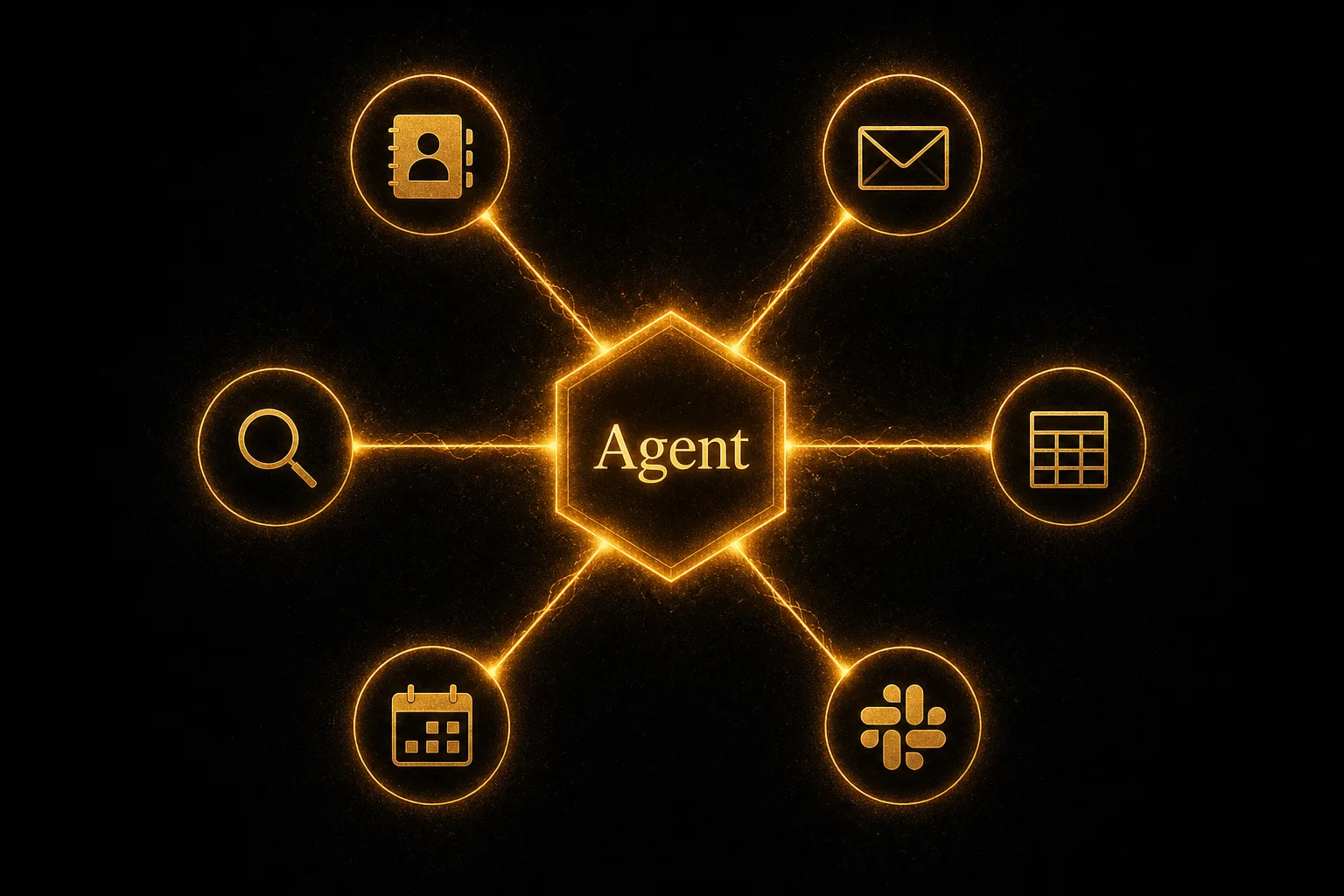
They skip the tooling. A chatbot with no tool access is just a fancy text box. The unlock for me was spending a day generating API keys for everything I use: CRM, email, Google Sheets, Slack, my SEO tools. Then I gave the agent a map of which tool does what. Now when I ask a question, it can actually go get the answer instead of making something up.
I wrote this post while cooking dinner, sending voice notes to my Slack bot, which is connected to my ops agent. The agent transcribed, processed, and organized my thoughts. That only works because the tools are connected.
They expect magic on day one. These things require iteration. My first version was rough, and not because the model was dumb. It did not have the full context of my business and my clients, and it did not have tools to look up information on my behalf. So it invented what it thought was its best assessment of the situation, and I rewrote the outputs entirely. Three months of build, run, fix, document, repeat is what made it useful. The ops engine at the center of my day is barely a month old, but it inherited everything the earlier tools taught me.
Eventually that loop became part of the system itself. Once a week the agent audits its own instructions and flags what is stale or contradictory. When something breaks, the fix includes updating the docs so the same failure cannot happen twice. It gets better because improving itself is one of its jobs.
What the day actually looks like now
I have a newborn. Summer. I do not want to be chained to a desk.
The agent handles the desk for me.
Morning: a brief lands in Slack at 9:15. Overnight email triaged, yesterday's call transcripts processed, open client tasks pulled from the board, anything needing a decision flagged. One post instead of six apps. I read it on my phone while the kids eat breakfast.
Throughout the day: I send voice notes when ideas hit or tasks come up. Walking the dog, at the pool, making dinner. The agent holds a live connection to Slack, so it picks the message up in seconds rather than whenever a schedule happens to run. It captures the idea, has the context to understand what I mean, and either executes or queues for review.
Does it complete everything perfectly? No. There is still a human in the loop. But the human in the loop is reviewing work, not doing the grunt work to get there. That is the difference.
Human-in-the-loop is the feature
People ask if agents will become fully autonomous. Maybe for some tasks. But for running a business, I think the human in the loop is the point.
If you are completely disconnected from the details, you lose touch with what is happening. The agent reduces the busy work so you can spend time on the decisions that matter. It does not make the decisions for you.
The goal is not "set it and forget it." The goal is: small teams become many times more productive because the humans focus on high-leverage work while the agent handles everything else.
What comes next
The frontier right now is multiplayer. My agent works for me, on my machine. But most businesses are teams. Getting agents to work across multiple people, with shared context, is where the real leverage is for most companies.
The other piece is reliability. Agents work by calling AI models, which means outputs can vary. Business needs predictability. The solution is pushing repeatable work into deterministic code: scripts that run the same way every time, with the AI handling only the parts that genuinely require judgment.
That is where I am spending time now. Building systems that use AI where it adds value and code where consistency matters.
If you are thinking about building agents for your business, the advice is simple: start small, connect your tools, and expect to iterate. The demos make it look like magic. The reality is more like building any other system: it works when you put in the work to make it work.
We build custom business apps, including AI-powered tools, for growing companies. If you want to talk about what an agent could do for your operations, book a free audit.